
Nowness VS Nostalgia
On illusions and a conspiracy of hope

We seem hungry for nostalgia at the moment. The year kicked off with the internet deciding (how does it do this?) that we must all share photos of ourselves from 2016. I haven’t done so, but lots of my friends have and it’s been fun to see the different universes we were all inhabiting back then.
Then: I don’t need to share photos to tell you that I was twenty three, wrapping up my masters degree and planning a wedding for the following autumn. I was really struggling with a persistent acne flare up which was seemingly untreatable. Around this time I met with a florist at Grind London Bridge and she seemed completely insane but very brilliant and cheap so we booked her. The flowers turned out great. But she sent us angry emails on our honeymoon demanding the immediate return of her vases.
Now: I’m sat in the living room of my cottage surrounded by toys and discarded pyjamas. I find it’s easier to get the kids dressed downstairs where my son can be contained, but then I forget to return the pyjamas to their bedroom, so they sit there as reminders of our morning ritual. Builders are beginning their work on my neighbour’s house next door; their scraping and dull thudding noises are just audible through our thick walls. I’m thinking about where I’ve left my wallet (have you seen it?) and the cold water swimming safety talk I attended this morning. The woman, Tara, said being in cold water made her feel joyful. That it changed her life. I’m debating whether or not to become that person who swims outside in January.
Then: 2016 was the year of Brexit and Trump’s election. Tectonic shifts in our political reality. Much political handwringing. At the time, many of us got drunk and consoled ourselves watching reruns of The West Wing. Perhaps it was the beginning of the end of democracy as we know it.
Now: Canadian Prime Minister Mark Carney gives a speech warning that ‘Nostalgia is not a strategy’ when it comes to dealing with Trump. He talks about ‘the end of a pleasant fiction and the beginning of a harsh reality, where geopolitics … is submitted to no limits, no constraints.’ He says that the rules based order, which was birthed at the end of the second world war, and apparently shaped the way major powers have done politics for decades, is finished. Most of us have known this for some time. The difference now is that the implications of our new reality are finally starting to affect nations in the global north. These are nations who think that it is better to cling on to the pretence of order; who feel nostalgic for the world as they think it once was. These are nations with leaders who have presided over a genocide and then have the audacity to talk about the importance of sovereignty and human rights norms, as if they have ever existed meaningfully for people living under occupation.
Then: In 2016 I was angry. And having lots of arguments with family members about politics. Telling them in no uncertain terms that their politics had screwed the world up for future generations.
Now: I’m waiting for the roofer, Bryan, to drop by. He’s a nice man who will fix your roof for £50 and a piece of christmas cake. Except our roof is still leaking so he’s coming back, and will decide whether or not we need to rebuild our chimney. I’m worried about how much that might cost; someone I know said it could run into the thousands. I trust Bryan, and obviously can’t see the state our chimney is in. I don’t want my roof to leak anymore.
Now: As I watch people share pictures from their lives in 2016 nobody seems to acknowledge the extent to which this was the year of our undoing. And so I find that I am not interested in reproducing nostalgia. Not if it means living in denial about what is happening now, and why it is happening the way it is.
But with everything changing so rapidly, it feels hard to process what the present moment actually is. Apparently this is one of the benefits of cold water swimming. You are so cold that you can only think about the water around you.
Now: About a week ago a woman on instagram shared her theory about why the 2016 nostalgia trend has become a thing. She thinks it’s because large language models need us to continually pump them with new content in order to keep “learning”. She argues that the 2016 nostalgia trend could acually just be a ploy by OpenAI or some other tech startup to harvest even more of our memories and information for their own business purposes.
It disturbs me, obviously. Even if it isn’t a plan orchestrated by a corporation, all of our information will dissappear, is dissappearing into these digital voids. And yet: after a year spent obsessively discussing AI at every opportunity, Radio 4 is now trailing a programme which interrogates if the bubble is about to burst. Will the presenters acknowledge the extent to which Radio 4 itself has perpetuated that bubble, supporting the hype these business leaders have lovingly nurtured?
I feel caught between three corners of time. Our past, present and future are all converging into a disturbing metanarrative which both feeds and destroys itself over and over again and again. I go back to Carney’s speech and find myself surprised to see the former banker cite Václav Havel’s theory of how societies functionally uphold falsehoods. ‘The system’s power comes not from its truth, but from everyone’s willingness to perform as if it were true, and its fragility comes from the same source. When even one person stops performing … the illusion begins to crack.’
Now: A wooden windchime my daughter made last summer swings back and forth in the breeze. My neighbour’s builders are drilling something now, but I’ve always been good at zoning noises out. Across the road the winter warmer café I have written about before is still open, providing hot food and care to anyone who needs it. I’m sat alone at home right now, but even the fact of its existence brings me comfort.
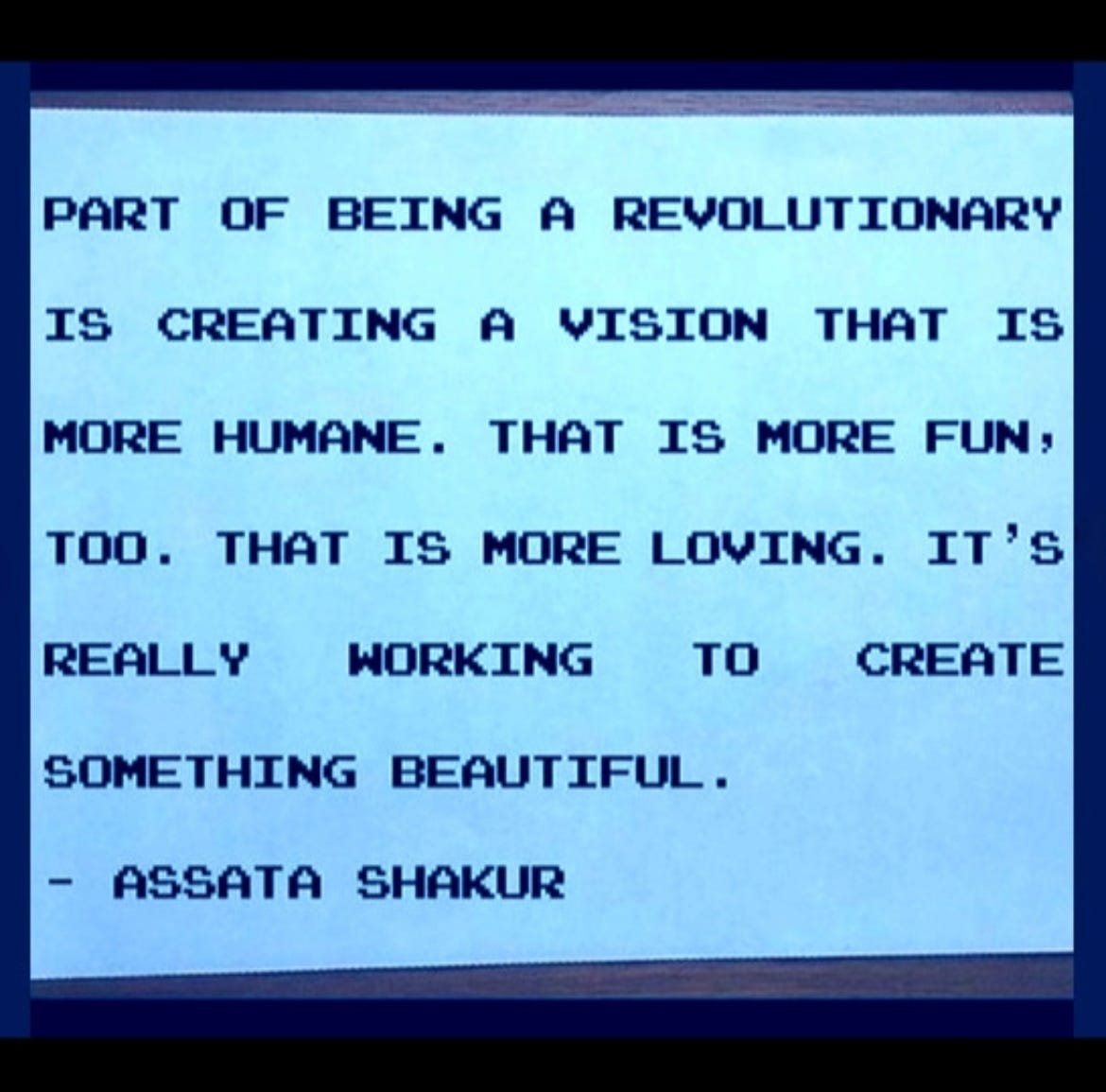
Now: I’m in search of people who have stopped performing, and I’m finding them in fields, cafés and in my DMs. They are participants in a conspiracy of hope. It is these people who convince me that an alternate and truer reality of resistance and resilience exists everywhere around me, if only I am present enough to see it.
Now: A knock on the door. Bryan is here. Time to fix that roof.
Thanks for sharing this, I'm really struck but the mundane yet revolutionary idea of hope.
English is not my first language so i’m definitely found it difficult to understand it all and share the same 2016 US knowledge but i really love it